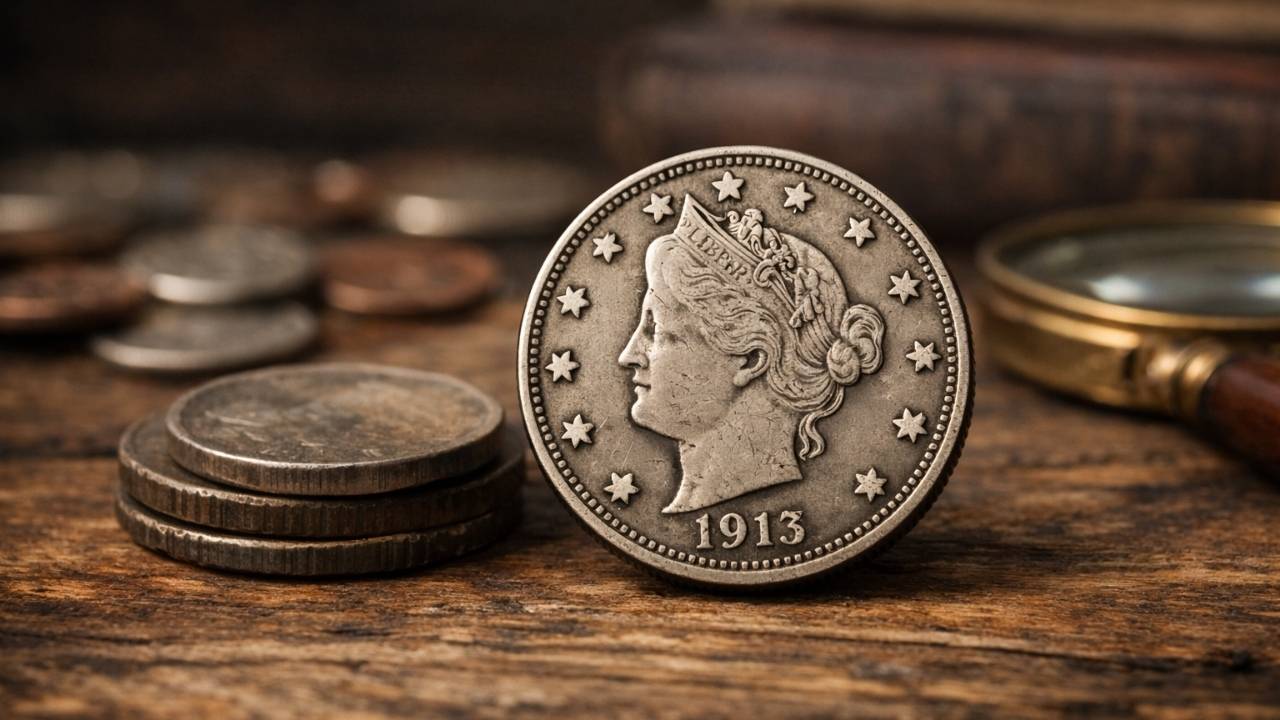
1913 Liberty Head Nickel: The 1913 Liberty Head Nickel is one of the most mysterious and legendary coins in American numismatics. Known as the “Impossible Nickel,” it was never officially authorized for production, yet five specimens somehow came into existence. Over the decades, these coins have become the stuff of legend, commanding millions at auction and sparking endless debates among collectors. Today, rumors swirl that if one of these nickels were to surface in perfect condition, it could be valued at an astonishing $2.5 billion, shaking the entire collectibles market.
The Origins of the Liberty Head Nickel
The Liberty Head Nickel was first introduced in 1883 and remained in circulation until 1912. In 1913, the U.S. Mint transitioned to the Buffalo Nickel, which featured a Native American profile on the obverse and a buffalo on the reverse. Officially, no Liberty Head Nickels were struck in 1913. Yet somehow, five examples exist, each carrying with it a story of intrigue and speculation.
Theories abound regarding their creation. Some believe they were struck clandestinely by mint employees, while others suggest they were experimental pieces. Whatever their origin, the 1913 Liberty Head Nickels are among the rarest coins in the world.
The Famous Five Specimens
Only five 1913 Liberty Head Nickels are known to exist. Each has a unique history and provenance, adding to the mystique of the coin. Over the years, these nickels have passed through the hands of prominent collectors, museums, and auction houses, each sale adding to their legend.

The coins are often referred to by the names of their owners, such as the Eliasberg specimen, the Olsen specimen, and the Walton specimen. Each has commanded extraordinary prices at auction, reflecting their rarity and desirability.
The Rumored $2.5 Billion Valuation
The idea that a 1913 Liberty Head Nickel could be worth $2.5 billion may sound unbelievable, yet it reflects the fascination with rare collectibles. In numismatics, value is driven by rarity, condition, historical significance, and demand. If a previously unknown specimen were discovered—perhaps in flawless condition or with unique characteristics—it could spark a bidding war among the wealthiest collectors.

To understand this speculation, consider the record prices achieved by other rare collectibles:
| Collectible Item | Record Sale Price | Year Sold |
|---|---|---|
| 1933 Double Eagle Gold Coin | $18.9 million | 2021 |
| 1907 Ultra High Relief Double Eagle | $4.75 million | 2005 |
| Honus Wagner Baseball Card (T206) | $7.25 million | 2022 |
| Leonardo da Vinci’s Salvator Mundi Painting | $450 million | 2017 |
| Hypothetical 1913 Liberty Head Nickel | $2.5 billion (speculated) | Not yet sold |
This table illustrates how rare items can achieve extraordinary values. While no coin has ever reached the billion-dollar mark, the speculation highlights the cultural and historical importance of the 1913 Liberty Head Nickel.
Collectors’ Passion and Market Forces
Coin collecting is driven by passion, history, and artistry. The 1913 Liberty Head Nickel embodies mystery and rarity, making it one of the most coveted coins in the world. Collectors cherish it not only for its scarcity but also for the intrigue surrounding its creation.
Several factors influence the coin market:

- Condition: Coins graded as Mint State or Proof command higher prices.
- Rarity: Limited mintage or unique varieties increase desirability.
- Historical Context: Coins tied to significant events or figures carry added value.
- Demand: Wealthy collectors and investors drive prices upward.
The Legacy of the Liberty Head Nickel
The 1913 Liberty Head Nickel remains a symbol of numismatic mystery. Its existence challenges the boundaries of official mint records and raises questions about how coins are created and preserved. The coin continues to inspire collectors, historians, and enthusiasts, serving as a reminder of the allure of the unknown.
The rumored $2.5 billion valuation underscores the imagination and passion that fuel the world of rare collectibles. Even if such a figure is speculative, it reflects the enduring allure of the coin and its place in history.

Expanding the Historical Context
The Liberty Head Nickel was part of a broader era of American coinage that reflected the nation’s growth and identity. Coins of the late nineteenth and early twentieth centuries were not just currency; they were symbols of national pride and artistry. The 1913 Liberty Head Nickel, with its mysterious origins, adds a layer of intrigue to this history.
The coin also represents the human fascination with rarity and the unknown. Its story is not just about metal and minting; it is about the thrill of discovery and the pursuit of something extraordinary.
The Role of Numismatics in Cultural Heritage
Numismatics is more than a hobby; it is a way of preserving history. Coins like the 1913 Liberty Head Nickel are tangible links to the past, reflecting the values, artistry, and aspirations of their time. Collectors and historians study these coins to gain insights into the cultural and political context in which they were created.
The Liberty Head Nickel, with its mystery and rarity, is a prime example of how coins can serve as cultural artifacts. Its rumored multi-billion-dollar valuation underscores the importance of preserving and studying such treasures.
Conclusion
The 1913 Liberty Head Nickel is more than a coin—it is a mystery, a symbol of rarity, and a piece of history. Its story reflects the intrigue of numismatics and the enduring allure of the unknown. Whether valued at millions or imagined at billions, the coin continues to captivate collectors and historians. The fascination with its potential worth reminds us that true value lies not only in price but in the legacy and mystery it represents.