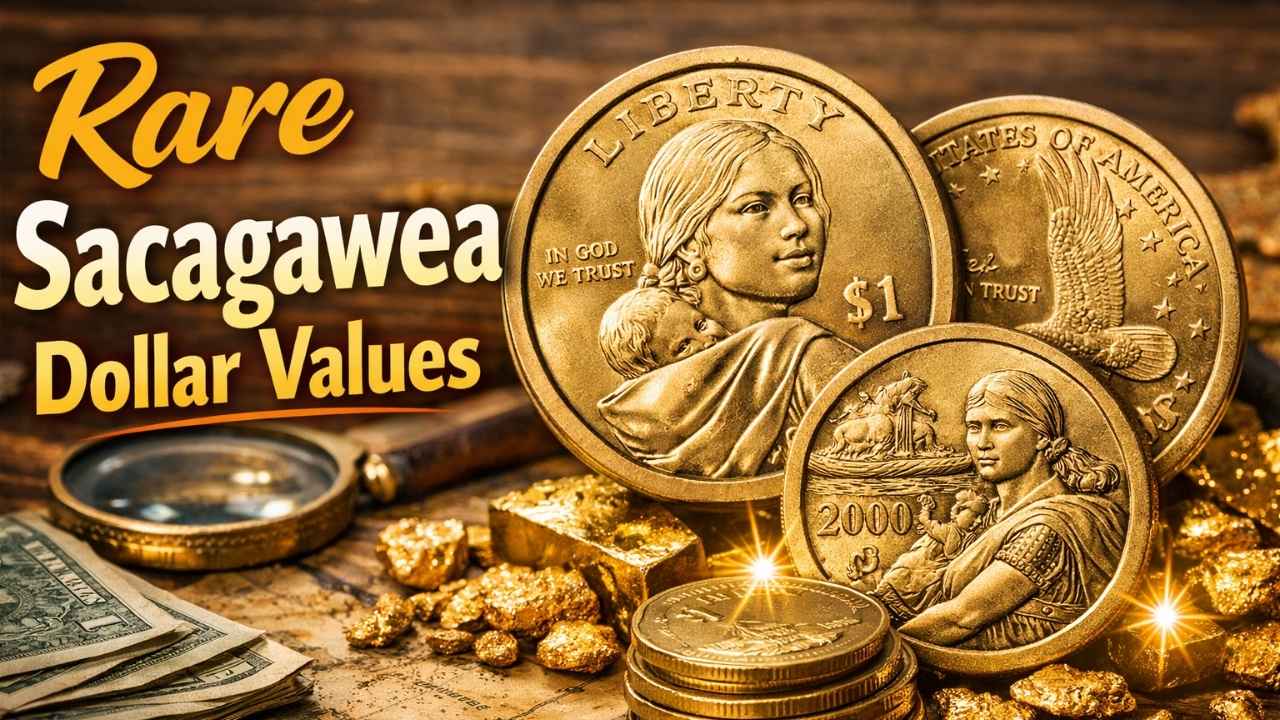
2026 Collector’s Guide: Coin collecting has always been a blend of history, art, and investment. Among modern U.S. coins, the Sacagawea Dollar stands out as a fascinating piece that bridges cultural heritage with numismatic intrigue. First minted in 2000, this golden-hued dollar coin honors Sacagawea, the Shoshone woman who played a vital role in the Lewis and Clark expedition. Over time, rare varieties and minting errors have elevated its value far beyond face value, making it a hidden treasure for collectors.
Origins of the Sacagawea Dollar
The Sacagawea Dollar was introduced to replace the unpopular Susan B. Anthony Dollar. Its manganese-brass composition gave it a distinctive golden color, and its design featured Sacagawea carrying her infant son, Jean Baptiste. The reverse depicted a soaring eagle, symbolizing freedom and the spirit of exploration. While the coin was not widely adopted in everyday transactions, collectors quickly recognized its potential.

Rare Varieties and Errors
The Sacagawea Dollar has produced some of the most remarkable modern coin rarities. Collectors prize these coins for their uniqueness and scarcity.
- Cheerios Dollar (2000): Distributed in cereal boxes as a promotion, these coins feature a prototype eagle reverse with enhanced tail feathers.
- Mule Error (2000): A mismatched die error where the obverse of a Washington Quarter was paired with the reverse of a Sacagawea Dollar.
- Proof Issues (2001 onward): Specially struck coins with mirror-like finishes, often limited in production.
- Enhanced Finish (2010): Collector sets included coins with sharper details and unique finishes.
- Ultra-Rare 2026 Error: A newly discovered anomaly valued at $2.1 million, cementing the coin’s place in numismatic history.
Table of Rare Sacagawea Dollar Values
| Year | Mint Mark | Variety/Error | Estimated Value (USD) | Notes |
|---|---|---|---|---|
| 2000 | P | Cheerios Dollar | $25,000–$30,000 | Prototype eagle tail feathers |
| 2000 | D | Mule Error | $100,000+ | Quarter obverse paired with dollar reverse |
| 2001 | S | Proof Issue | $50–$100 | Collector proof sets |
| 2010 | P | Enhanced Finish | $200–$500 | Special collector release |
| 2026 | P | Ultra-Rare Error | $2.1 million | Historic discovery |
Grading and Condition
The condition of a coin is crucial in determining its value. Professional grading services assign numerical grades based on strike quality, luster, and preservation.
- MS-60 to MS-64: Average uncirculated coins with minor marks.
- MS-65 to MS-69: High-quality coins with sharp details and minimal flaws.
- MS-70: Perfect coins with flawless surfaces, highly prized by collectors.
Hidden Wealth Insights
Many people overlook Sacagawea Dollars, assuming they are worth only face value. Yet hidden wealth lies in identifying rare varieties and errors. A coin found in circulation could potentially be worth thousands, or even millions, depending on its rarity. The 2026 discovery highlights the importance of examining coins carefully and staying informed about numismatic developments.
Investment Potential
Sacagawea Dollars demonstrate that modern coins can achieve legendary status. Investors are increasingly viewing rare varieties as alternative assets. Unlike traditional investments, coins offer both tangible value and historical significance. With proper research and patience, collectors can build portfolios that appreciate over time.

Collecting Strategies
For those interested in building a Sacagawea Dollar collection, consider these strategies:
- Focus on early mint years (2000–2002) for potential rarities.
- Acquire proof and enhanced finish issues for long-term value.
- Stay updated on new discoveries and auction results.
- Preserve coins in protective holders to maintain condition.
Conclusion
The Sacagawea Dollar is more than just a coin; it is a symbol of heritage, exploration, and hidden wealth. With rare varieties fetching extraordinary sums, collectors are reminded that treasures often lie in unexpected places. Whether you are a seasoned numismatist or a beginner, understanding mint marks, errors, and grading is essential to unlocking the full potential of these coins.